

Summary
This blog post guides business owners through the essential steps of setting up Google Analytics 4 (GA4) for accurate website tracking. It covers key configurations like Enhanced Measurement, conversion tracking, filtering internal traffic, linking Google Ads, and reviewing reports. By following these steps, businesses can gain valuable insights, improve website performance, and drive better marketing decisions. Need expert help? CMS Live is here to assist!
You will learn
- How to set up Google Analytics 4 correctly to track key website interactions.
- Which essential GA4 settings to configure for accurate data insights.
- How to use GA4 reports to improve website performance and conversions.
Is your website underperforming?
So, you’ve invested in a fantastic website, but it’s not bringing in the results you expected. Or maybe you’re struggling to understand how visitors are engaging with your content?
Setting up Google Analytics 4 (GA4) correctly is the key to unlocking valuable insights, making data-driven decisions, and ultimately growing your business online. By following the right steps, you can ensure your tracking is accurate and your data is useful.
Here’s how to get the basics right with GA4 so you can track performance accurately and make informed improvements.
Why setting up GA4 correctly matters
Google Analytics 4 provides a more advanced way to track website performance compared to Universal Analytics. With event-based tracking and AI-driven insights, GA4 helps businesses better understand user behaviour. However, without the correct setup, you might miss out on crucial data.
Five essential GA4 setup steps
1. Configure Enhanced Measurement
GA4’s Enhanced Measurement automatically tracks user interactions like page views, scrolls, outbound clicks, file downloads, and more—without needing extra code. As a result, you can gain deeper insights into user behaviour without additional setup.
➡ Go to Admin > Data Streams > Your Website Stream and ensure Enhanced Measurement is switched on. This helps you track user behaviour effortlessly.

2. Set Up Key Conversions
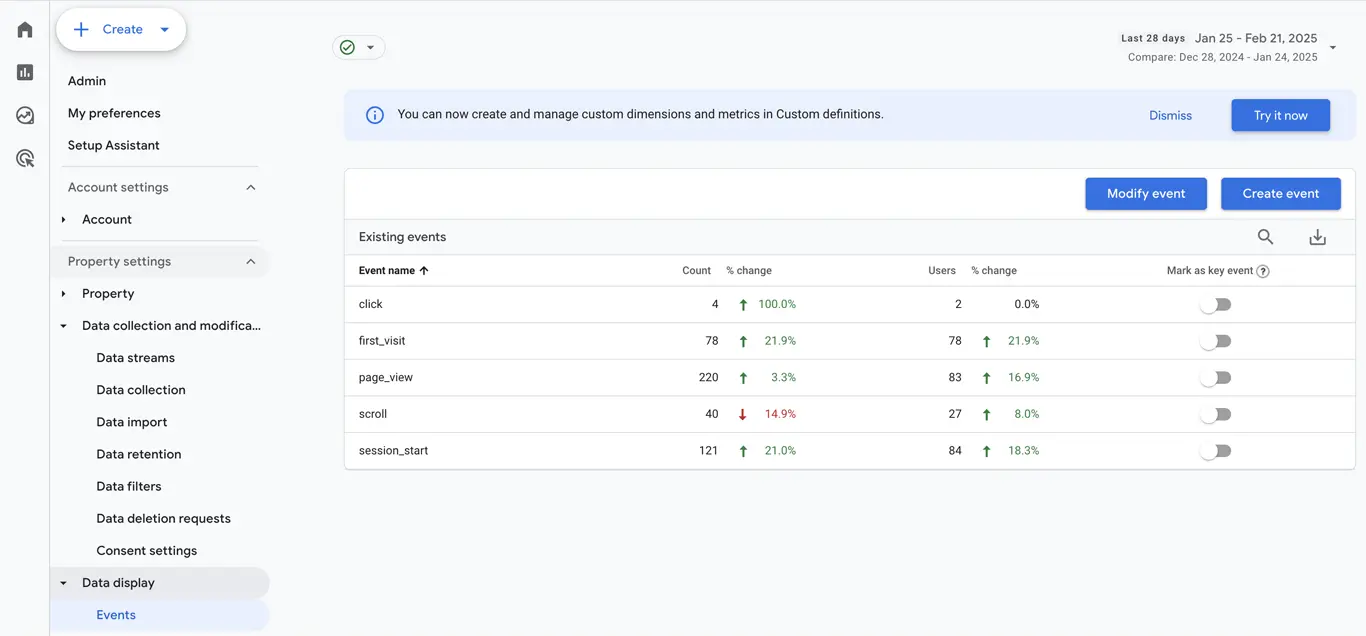
GA4 tracks basic events by default, but you need to define what success looks like for your business—whether that’s contact form submissions, purchases, or newsletter sign-ups. By setting up key conversions, you can measure the actions that truly matter.
➡ Go to Admin > Events, then mark important events as ‘Conversions’. This ensures GA4 tracks meaningful actions that drive business growth.
3. Exclude Internal Traffic
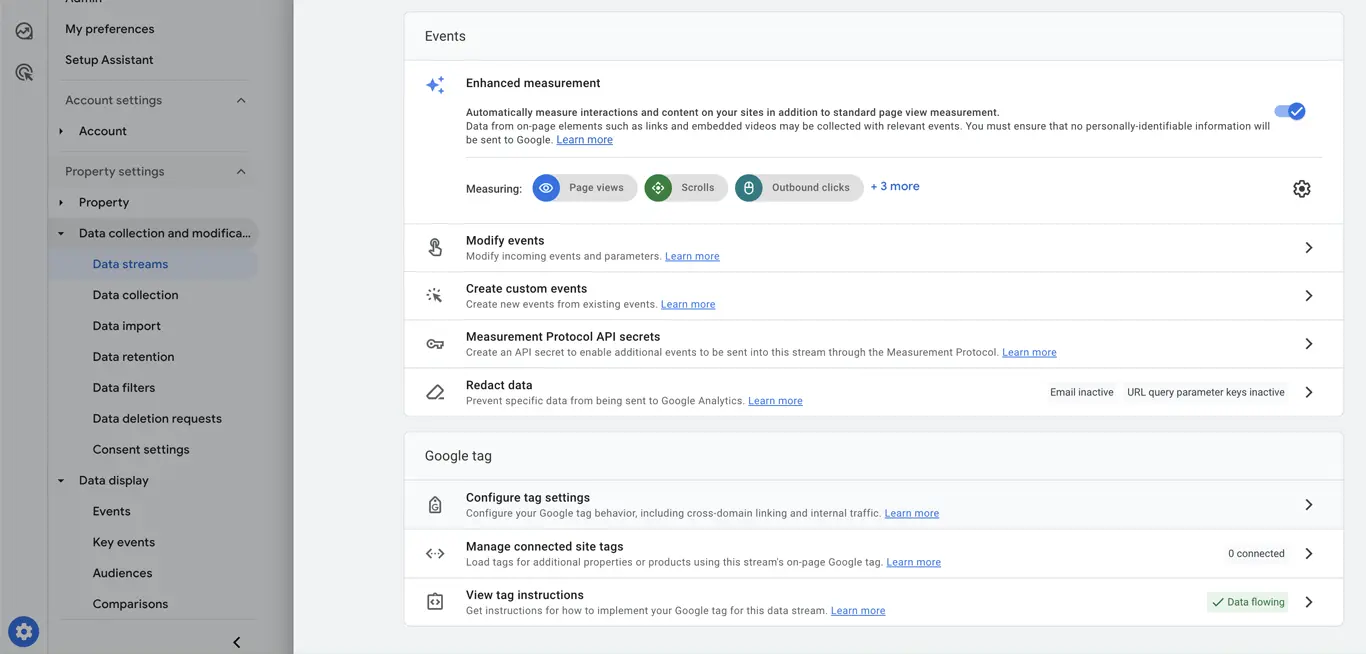
Your own visits to your website can skew your data. GA4 lets you filter out internal traffic so you’re only tracking real visitors. Without this step, your reports may not reflect actual customer behaviour.
➡ Go to Admin > Data Streams > Configure Tag Settings > Define Internal Traffic and add your office IP address.
4. Link GA4 with Google Ads
If you run Google Ads, linking your accounts allows you to see how your ads drive traffic and conversions, helping you refine campaigns for better results. This integration provides a clearer picture of how paid traffic interacts with your website.
➡ Go to Admin > Linked Accounts > Google Ads and connect your account to GA4.
5. Regularly Review Your Reports
GA4’s new dashboard may feel different from Universal Analytics, but it’s packed with powerful insights. Regularly check reports like Engagement, Acquisition, and Monetisation to spot trends and optimise your website’s performance. By keeping an eye on these reports, you can make data-driven improvements.
➡ Set up custom reports for the metrics that matter most to your business, making it easier to track progress at a glance.
How to make GA4 work for your business
Understanding GA4 reports and configuring them to match your business goals is key to getting value from your data. For example, setting up custom reports tailored to your objectives will help you focus on what truly matters. By setting up conversions, linking key platforms, and regularly checking reports, you can make informed marketing decisions that drive growth.
Get the most from Google Analytics 4
GA4 may take some getting used to, but with the right setup, it’s a powerful tool for understanding your audience and improving your website’s success. Fortunately, CMS Live is here to help! If you need help setting up GA4 or making sense of your data, get in touch with CMS Live - we’re here to help you grow your online presence with confidence.
📞 Call us: 01282 618210
📧 Email: hello@cmslive.co.uk