
Summary
Email authentication is no longer optional for businesses sending messages to Gmail, Yahoo, or Microsoft-managed inboxes. With new rules making DMARC, SPF, and DKIM mandatory for bulk senders, failing to meet these standards means your emails – including vital ones like order confirmations – may never reach your customers. This blog post explains what DMARC email authentication is, why it’s crucial for ecommerce businesses, and how CMS Live ensures your hosting setup supports proper email deliverability. Even if email isn’t your hosting provider’s core service, it’s part of your customers’ experience – and that makes it our concern too.
You will learn
- Why DMARC email authentication now matters more than ever
- How poor email setup affects order confirmations and alerts
- What CMS Live does to ensure emails reach your customers
What’s Going On With DMARC Email Authentication?
Google and Yahoo kicked things off – and now Microsoft has officially joined the ranks. In 2024, they all began enforcing mandatory email authentication for bulk senders. That means if you're sending emails to Gmail, Yahoo Mail, Outlook.com, Hotmail, or any other Microsoft-managed domain, and you're not properly set up with SPF, DKIM, and DMARC, you're going to have problems.
Emails won’t just land in spam – they might not land at all.
If your business sends order confirmations, password resets, or account notifications, this update directly affects you. Your customers won’t receive important messages if your setup isn’t right.
And while this is technically your IT team or email provider’s responsibility – as your web hosting partner, we’re not sitting this one out either.
Why Your Hosting Company Needs To Understand DMARC
Most clients come to us because they’re looking for a hosting partner who proactively solves problems – not someone who shrugs and says, "not our job." They just want their websites and email to work – securely, reliably, and without having to chase people around for answers.
So let’s be clear: even though DMARC email authentication may not sound like a hosting issue, it quickly becomes one when email deliverability affects your customers’ experience.
If you run an ecommerce website hosted by CMS Live and your order confirmation emails aren’t arriving, it’s going to reflect badly on your business – not your IT team.
That’s why we:
-
Monitor and flag domain issues that affect SPF, DKIM, and DMARC.
-
Collaborate with IT teams or email providers to ensure your DNS is configured correctly.
-
Include email deliverability in our technical support – because no part of your site operates in isolation.
We’re not resellers or hands-off hosting providers. We're technical partners who understand the bigger picture.
What Does DMARC Actually Do?
DMARC stands for Domain-based Message Authentication, Reporting, and Conformance.
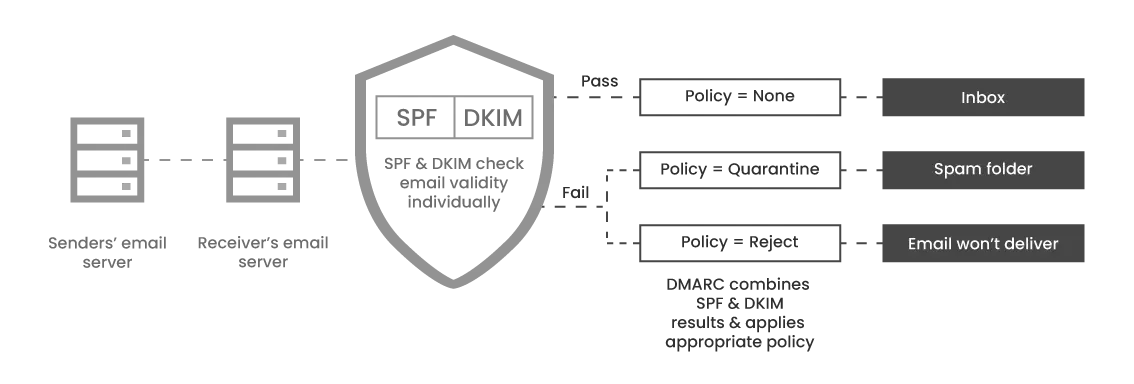
It works alongside SPF (Sender Policy Framework) and DKIM (DomainKeys Identified Mail) to:
-
Prove that your emails are really coming from your domain.
-
Block unauthorised senders spoofing your domain.
-
Tell receiving mail servers what to do with emails that fail the test (e.g. reject them).
Without DMARC, your domain is vulnerable to spoofing – and your legitimate emails are more likely to be flagged as spam.
With it, you get improved security and better email deliverability.
Bulk Sender? These Rules Apply to You
Microsoft now requires DMARC (along with SPF and DKIM) for any domain sending more than 5,000 messages per day to its services. Yahoo and Google have similar policies.
This isn’t just about newsletters or marketing emails. If your website sends transactional emails like:
-
Order confirmations
-
Shipping updates
-
Password resets
-
Appointment reminders
... you could be classed as a bulk sender, especially if you’ve got high traffic or a large customer base.
What We’re Doing For Clients at CMS Live
At CMS Live, we:
-
Check for missing or misconfigured SPF/DKIM/DMARC records as part of our website technical support
-
Configure DNS correctly for clients on our premium hosting or managed hosting services
-
Flag and fix issues before your customers notice anything’s wrong
-
Provide enterprise-grade secure website hosting that keeps up with the latest standards
If you’re switching to us from another provider, we’ll also do a full DNS and email configuration review as part of your migration.
The Bottom Line: You Can’t Afford to Ignore Email Authentication
DMARC email authentication isn’t optional anymore. If your business relies on email to talk to customers – and who doesn’t? – this affects you.
Whether you have an internal IT team, an external email provider, or you’re trying to piece things together yourself, your hosting company should know what’s going on. We do.
Because for us, website hosting isn’t just about storage and speed. It’s about keeping the whole system working smoothly – end to end.
Need a hosting partner who gets the technical details right?
Let’s make sure your customers get the emails they expect.
👉 Explore our secure website hosting services or get in touch today and we’ll take it from there.